The challenge
Depending on their application, textile surfaces must meet different functional requirements. These can include improved slip resistance, defined contact areas or specific surface textures. These properties need to be integrated selectively without unnecessarily affecting the material's basic functionality.
The development process
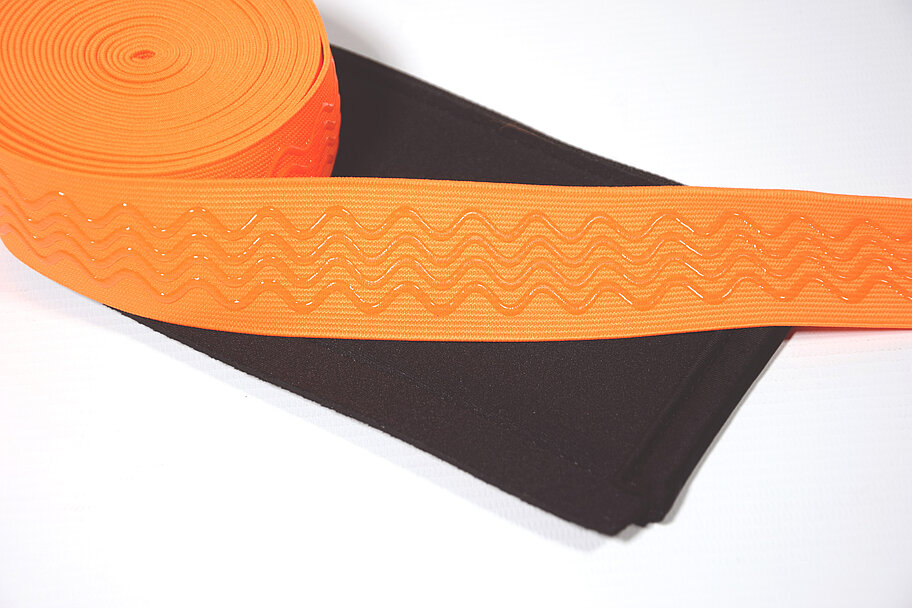
A&R uses silicone printing to add functionality to selected areas of textile surfaces. Silicone properties, application quantity, layer thickness and print pattern are tailored to the material and desired function. Different structures and application geometries enable application-specific surface design.
The solution
The result is textile components with carefully adapted surface properties. Application-specific silicone printing can create slip-resistant areas, defined contact structures or functional patterns directly on the material. A&R thus combines material knowledge and processing technology to develop individual functional solutions.