The challenge
Textile and flexible materials can stretch, shift or change under heat and pressure during processing. Maintaining defined tolerances is particularly challenging with complex components and manufacturing processes involving multiple stages.
The development process
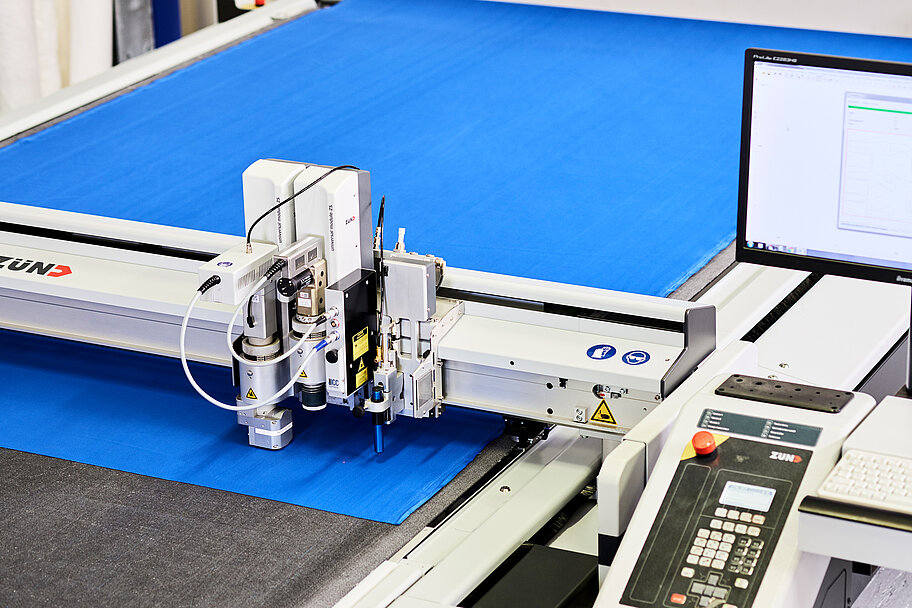
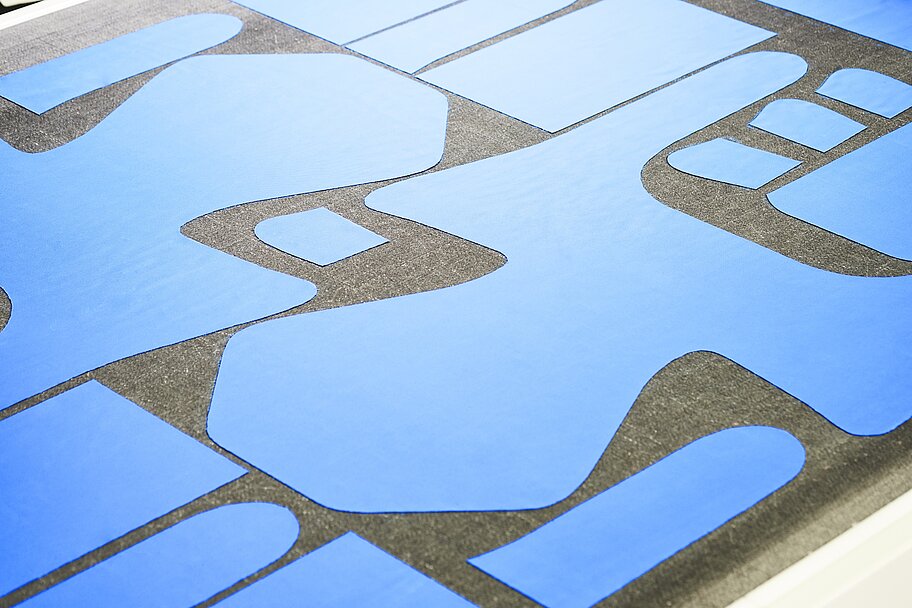
A&R considers material behaviour throughout the manufacturing chain and uses coordinated tools, positioning and holding fixtures, and semi-automated processes. Programmable pattern sewing machines, for example, enable precise, repeatable stitching. Carefully coordinating cutting, material positioning and process parameters minimises dimensional variations during processing.
The solution
By combining an understanding of materials, precise positioning and coordinated manufacturing processes, dimensional variations can be reduced even in demanding textile components. Defined tolerances can thus be achieved reliably and reproducibly while taking the specific material properties into account.