The challenge
Textile materials are naturally flexible and pliable. Some applications, however, require dimensionally stable three-dimensional components that retain their textile appearance and feel as far as possible. The challenge is to combine shaping and stabilisation in a controlled way.
The development process
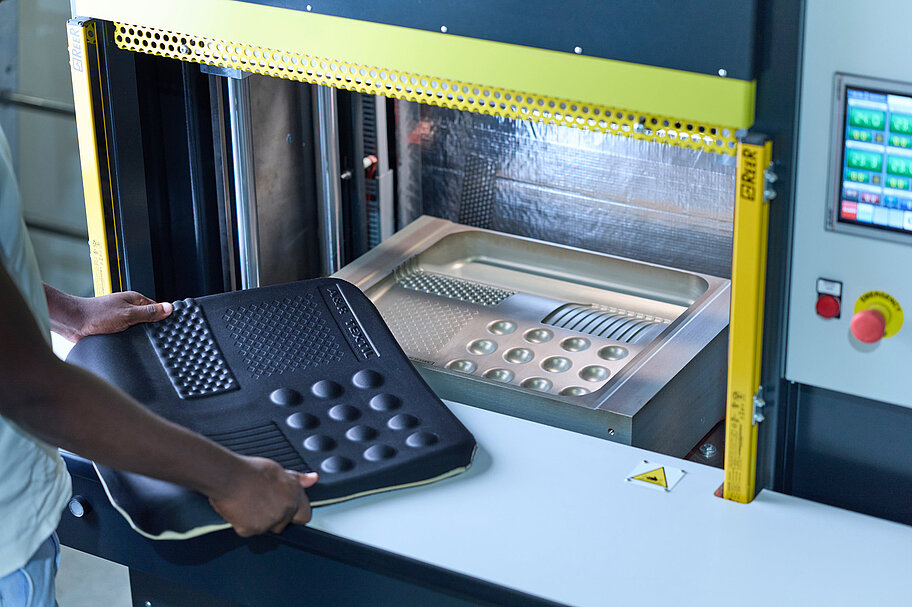
A&R selects suitable textile materials and tailors their processing to the desired component geometry. One option is to use textiles containing thermally activated fusible fibres. Controlled heat and pressure activate these fibres, while adapted tools shape and stabilise the material.
The solution
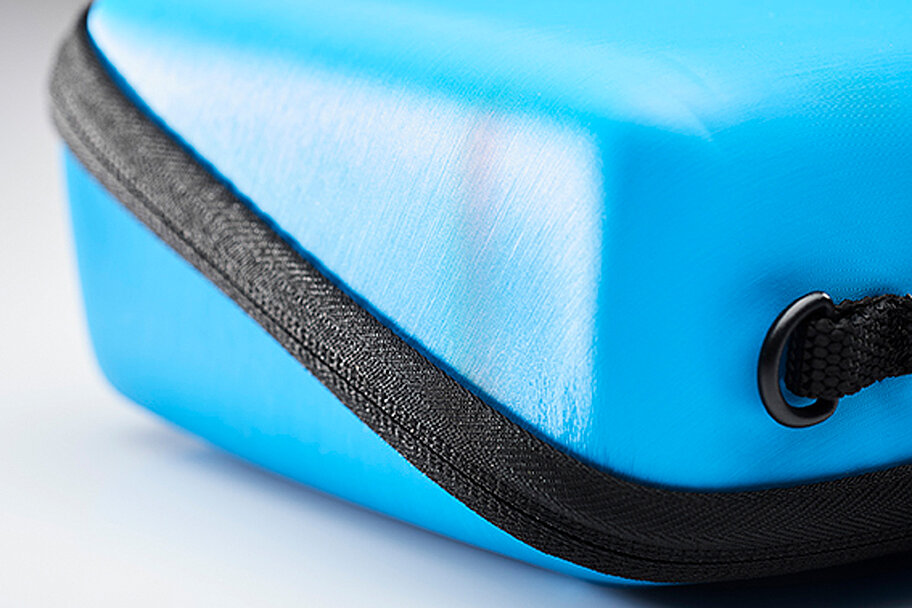
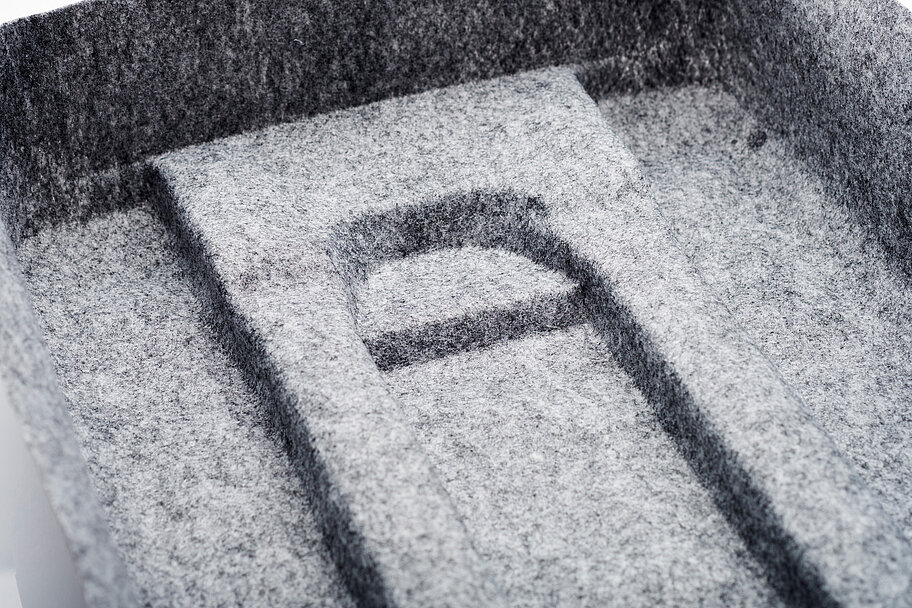
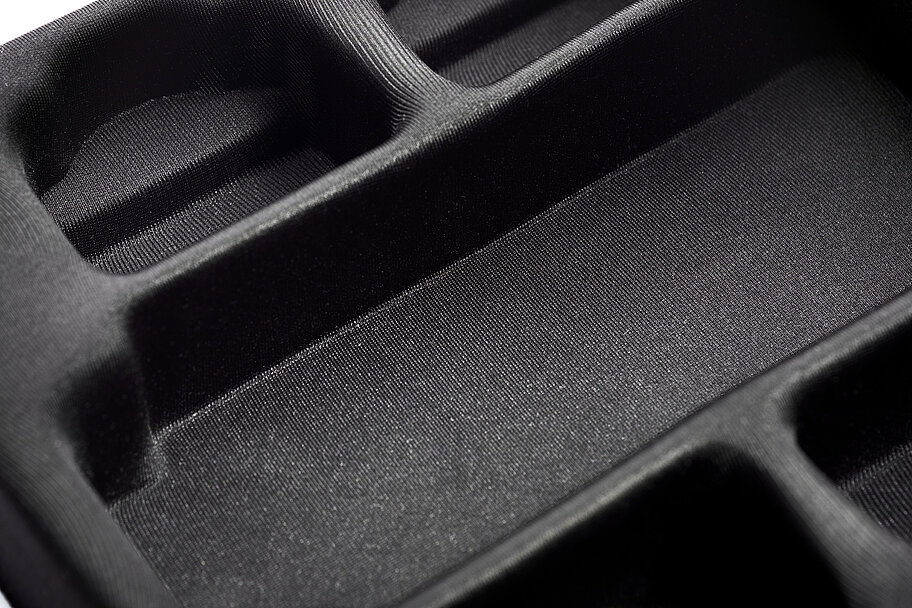
The result is three-dimensionally shaped textile components with defined dimensional stability and largely preserved textile surface characteristics. Examples include cases, covers and other functional components that combine textile properties with three-dimensional shaping.