The challenge
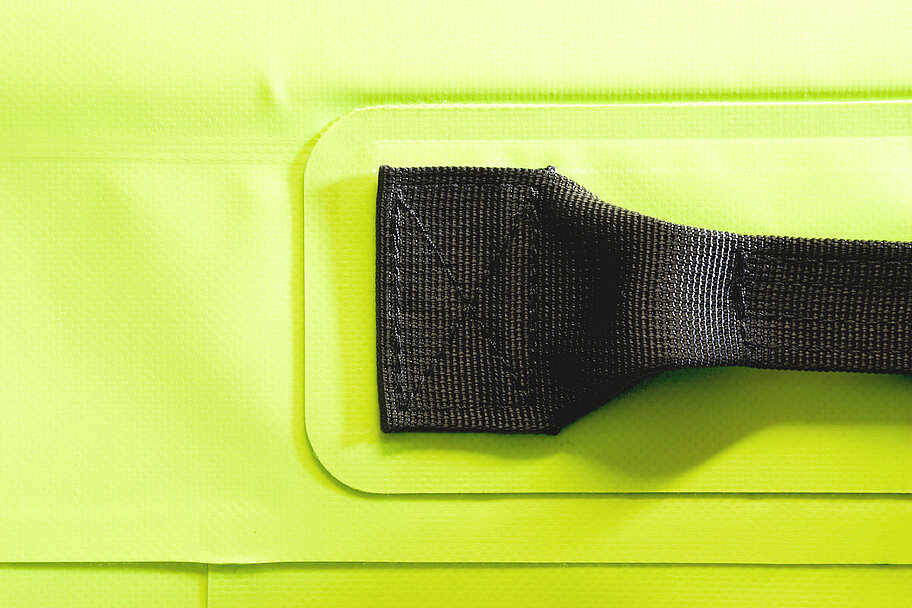
Waterproof textile joints place high demands on materials, design and processing. Depending on the application, they must prevent moisture ingress, withstand mechanical loads and preserve the component's functionality. The achievable level of watertightness depends largely on the materials, joining technology and specific requirements.
The development process
A&R selects the appropriate joining method according to material properties, component geometry and application. In addition to sealing sewn seams with tape, technologies such as ultrasonic, high-frequency, hot-wedge and hot-air welding are used. Joint geometry and process parameters are carefully coordinated to achieve the required watertightness.
The solution
The result is application-specific joints designed to meet the relevant technical and functional requirements for watertightness. From seams sealed after sewing to directly welded material joints, A&R offers a range of solutions. The interaction of material, joining technology and processing is key to reliably achieving the required seal.