The challenge
Not every textile material can be welded directly. Weldability depends on factors including material composition, any coatings and the thermoplastic properties of the materials used. At the same time, joints must meet the relevant requirements for strength, flexibility and, where necessary, leak tightness.
The development process
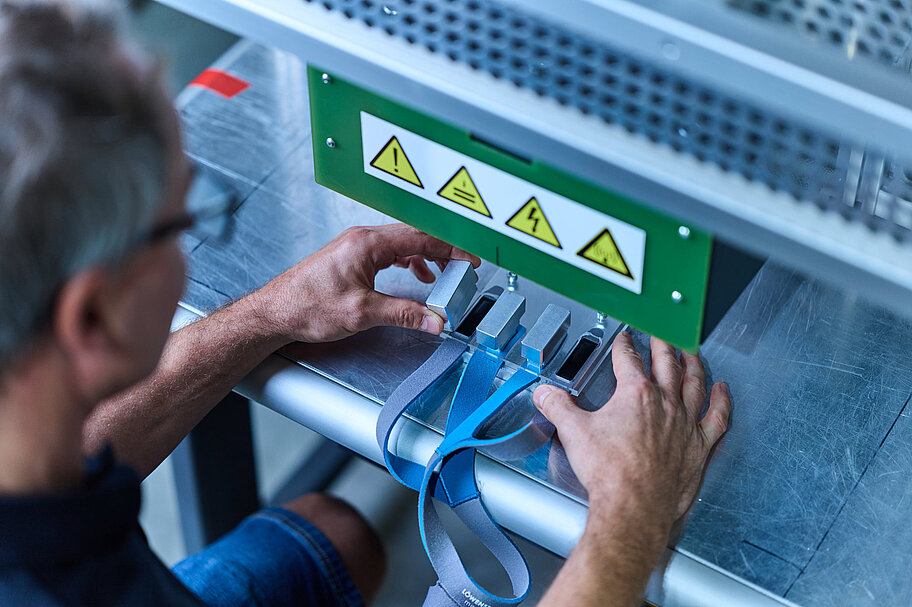
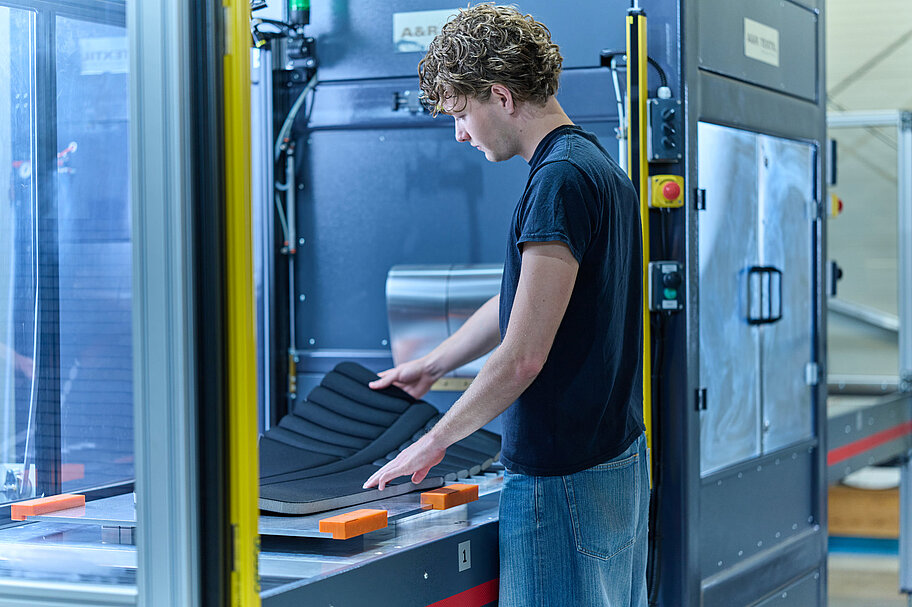
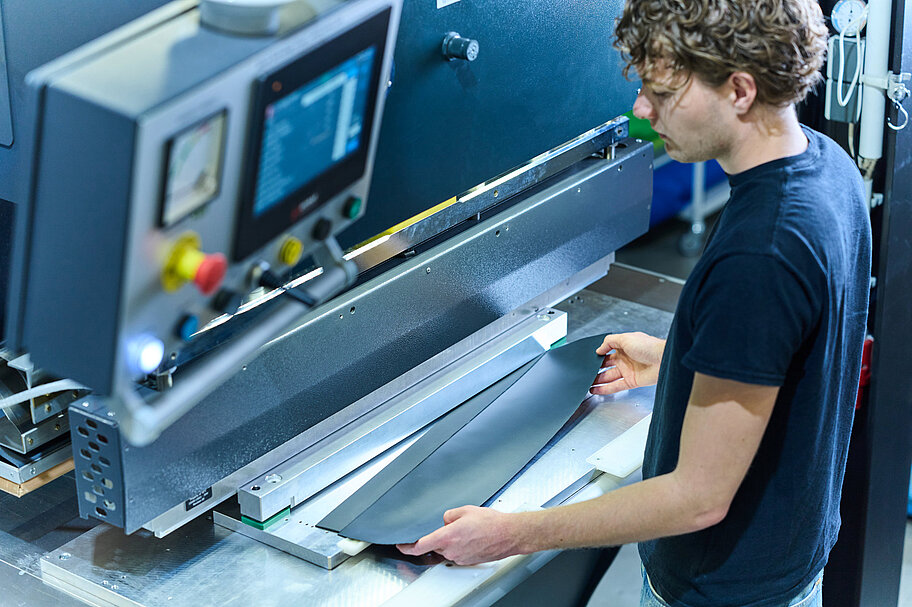
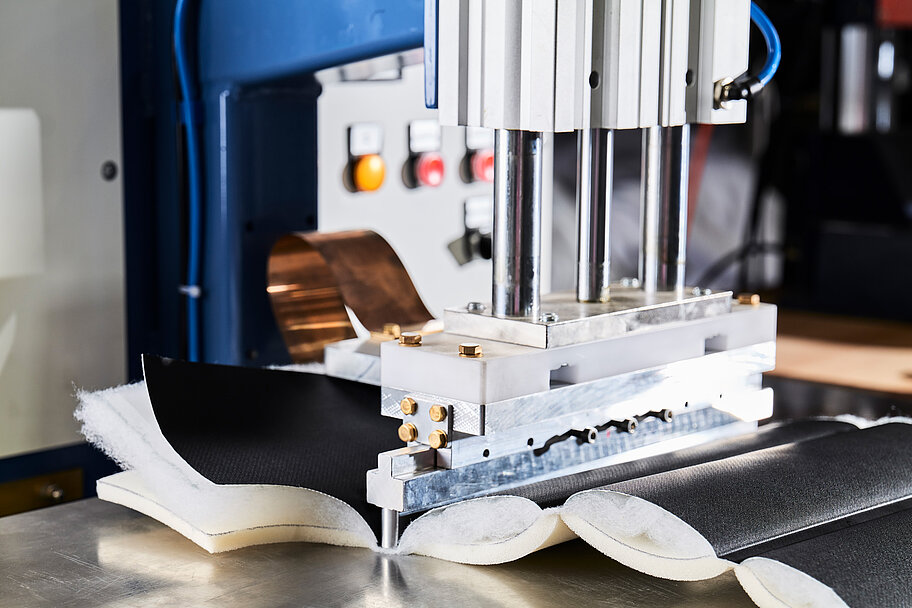
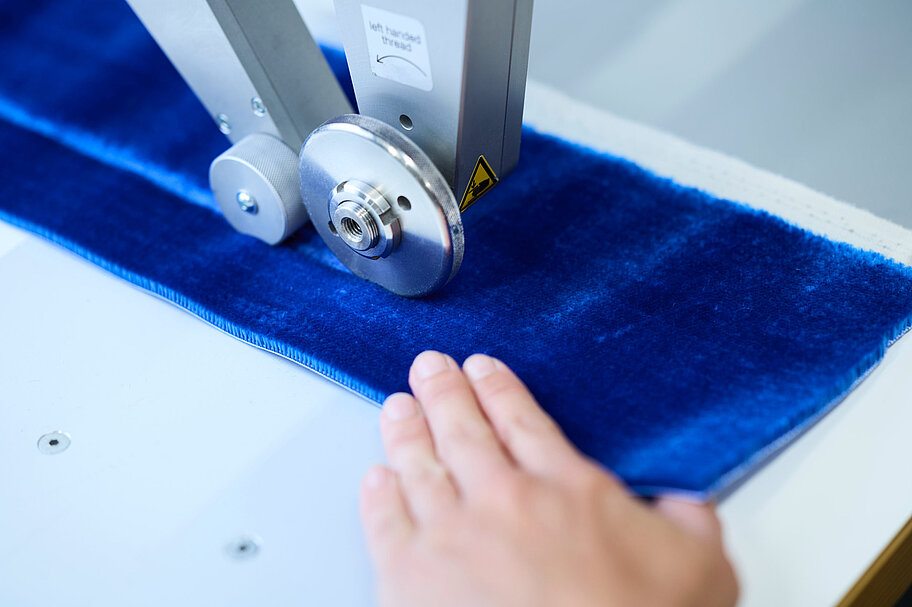
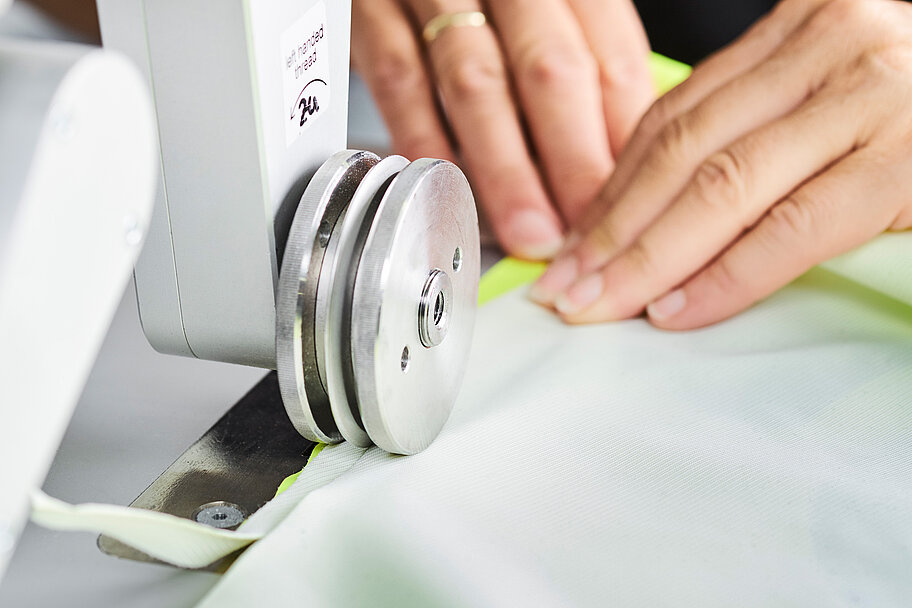
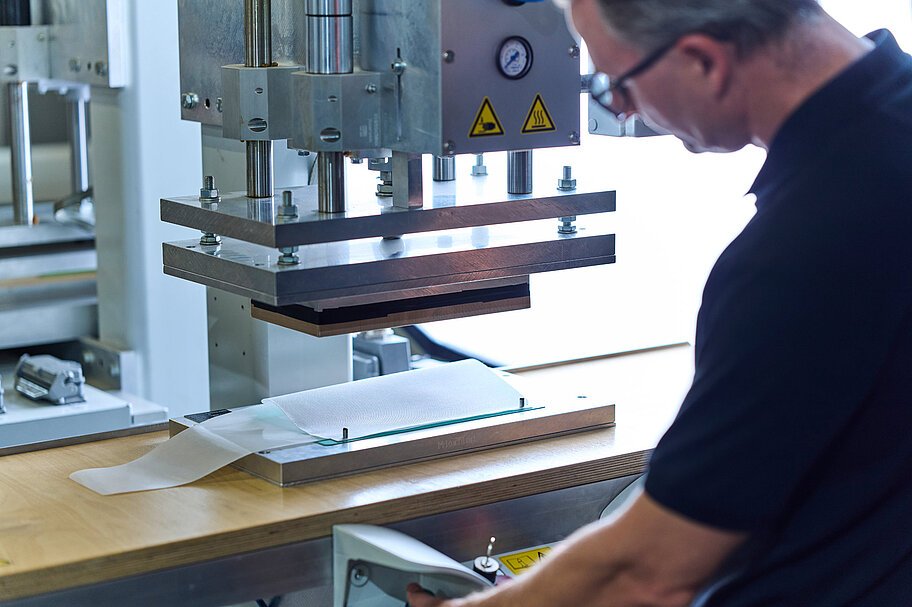
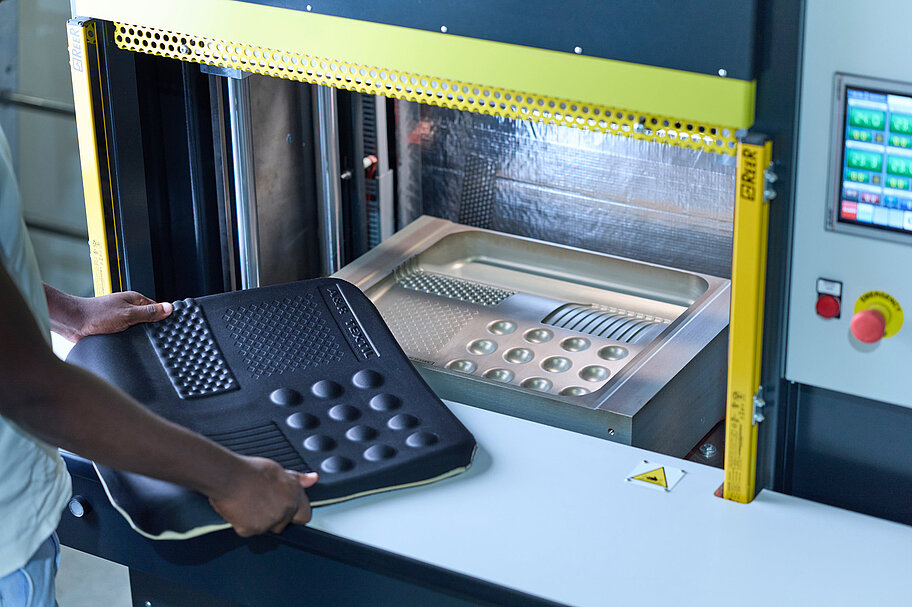
A&R examines material properties and selects the appropriate welding process according to component geometry and requirements. These include ultrasonic, high-frequency, impulse, hot-wedge and hot-air welding. Tools and process-specific parameters are carefully tailored to each material combination.
The solution
The right combination of material, welding technology and process control produces strong, reproducible textile joints. Depending on the application, leak-tightness requirements can also be taken into account. If materials cannot be welded directly, A&R investigates alternative material combinations or suitable joining methods.